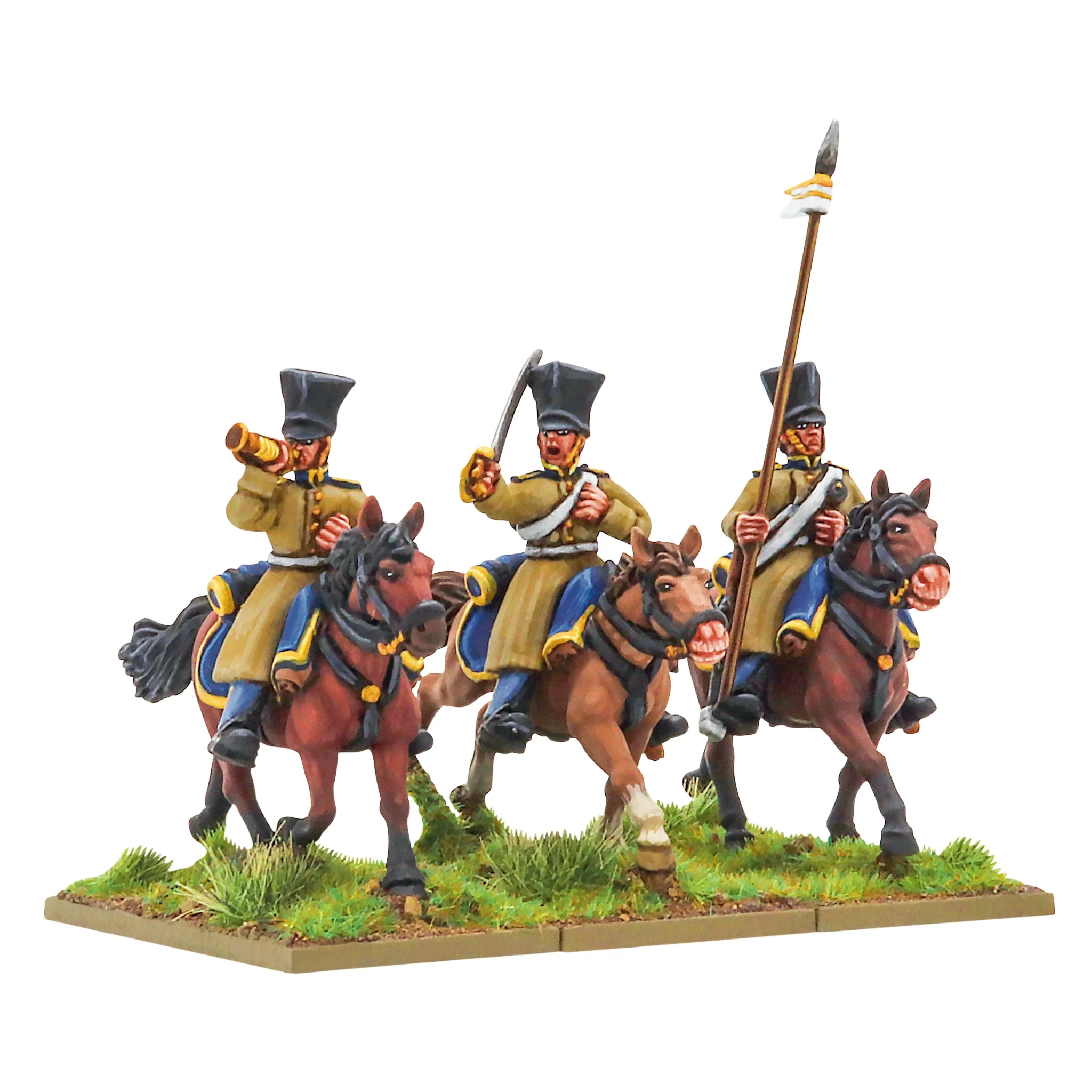
Crimean War Russian Lancers command
The Russian cavalry force was the largest in Europe, totalling over sixty regiments organised into twenty cavalry divisions. The light cavalry consisted of hussars and lancers or uhlans. Much as with the infantry, the cavalry training consisted of wheels and manoeuvres designed for the parade ground with little tactical application.
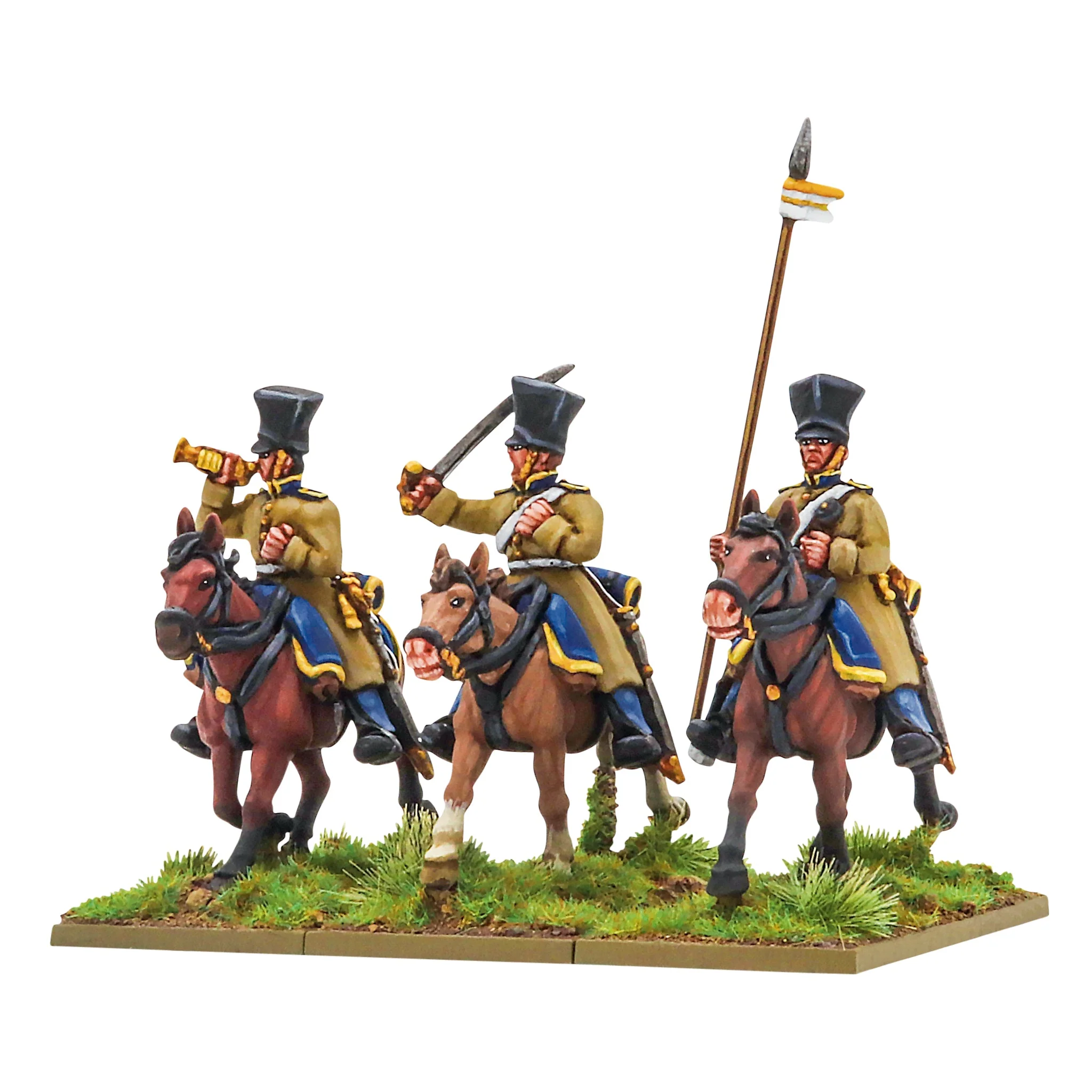
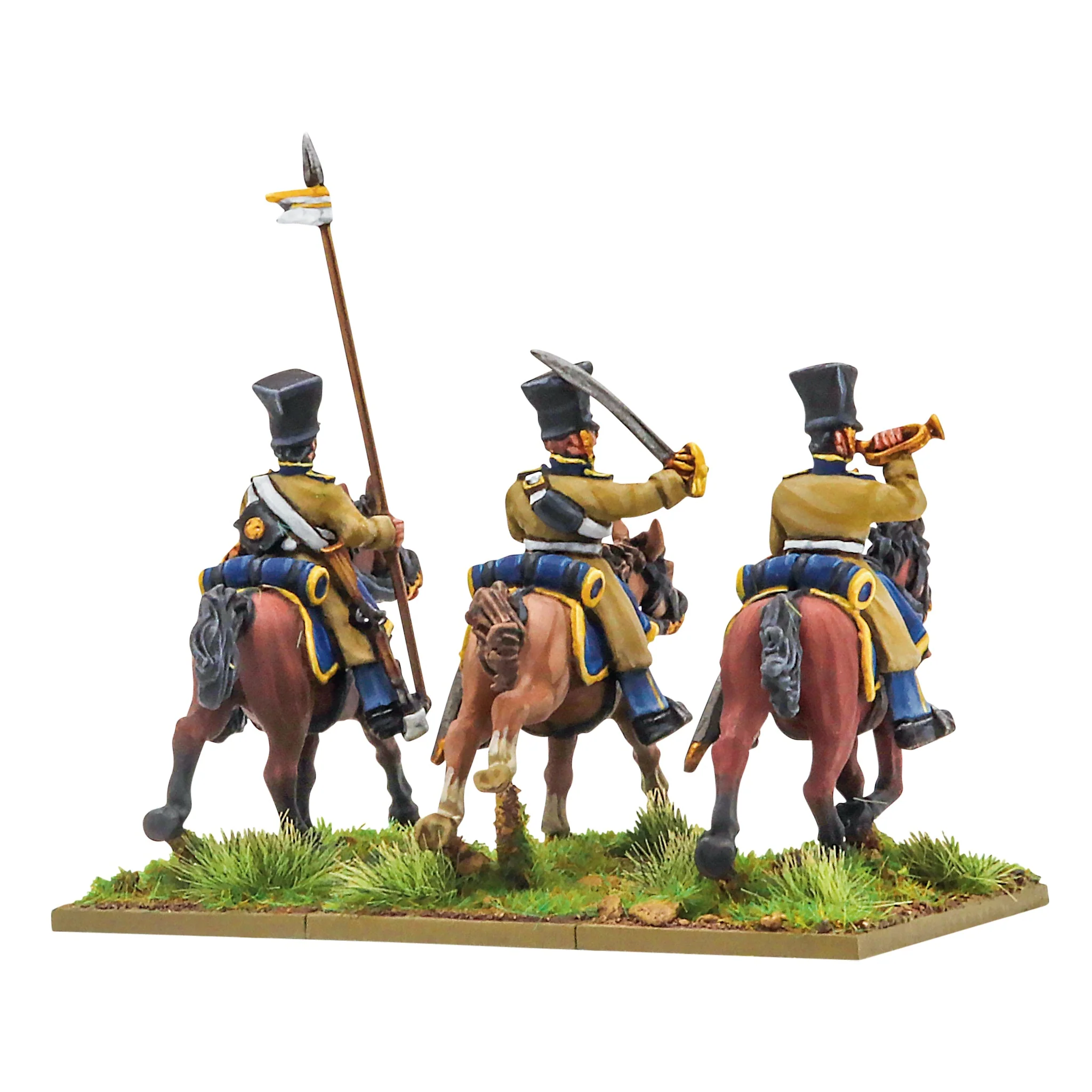
Russian lancers (also known as Uhlans in the Prussian fashion) were uniformed in Polish style, with tall four-pointed ‘czapka’ hats and greatcoats contrasting with their gaudily dressed British opponents. On campaign, their czapkas were usually covered with oilskin for protection from the elements.
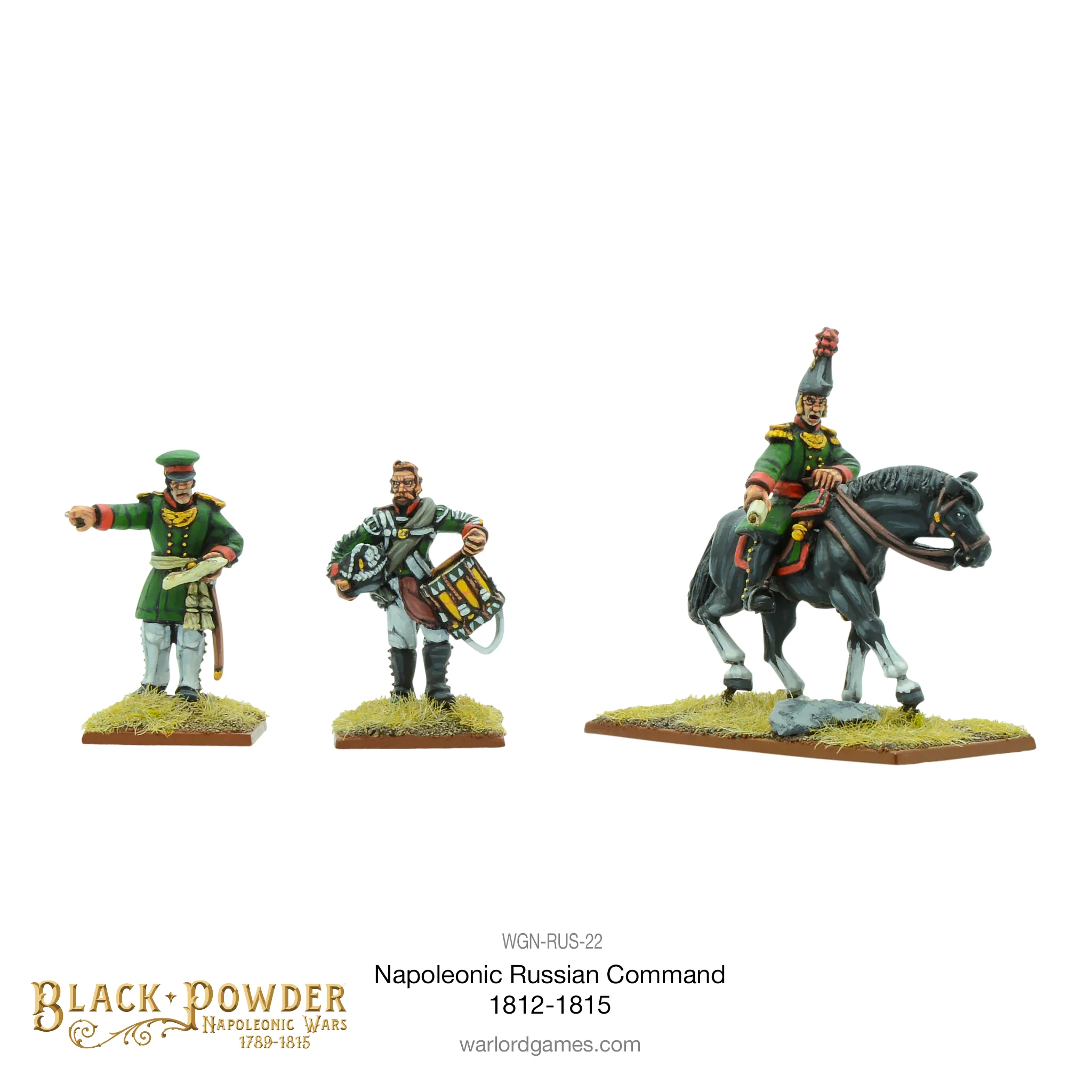
Sculpted by Michael Percy. Studio miniatures painted by Andrés Amián.
Models supplied unassembled and unpainted
More Images
Crimean War Russian Lancers command
The Russian cavalry force was the largest in Europe, totalling over sixty regiments organised into twenty cavalry divisions. The light cavalry consisted of hussars and lancers or uhlans. Much as with the infantry, the cavalry training consisted of wheels and manoeuvres designed for the parade ground with little tactical application.
Russian lancers (also known as Uhlans in the Prussian fashion) were uniformed in Polish style, with tall four-pointed ‘czapka’ hats and greatcoats contrasting with their gaudily dressed British opponents. On campaign, their czapkas were usually covered with oilskin for protection from the elements.
Sculpted by Michael Percy. Studio miniatures painted by Andrés Amián.
Models supplied unassembled and unpainted
Product Information
Product Information
Shipping & Returns
Shipping & Returns
Description
The Russian cavalry force was the largest in Europe, totalling over sixty regiments organised into twenty cavalry divisions. The light cavalry consisted of hussars and lancers or uhlans. Much as with the infantry, the cavalry training consisted of wheels and manoeuvres designed for the parade ground with little tactical application.
Russian lancers (also known as Uhlans in the Prussian fashion) were uniformed in Polish style, with tall four-pointed ‘czapka’ hats and greatcoats contrasting with their gaudily dressed British opponents. On campaign, their czapkas were usually covered with oilskin for protection from the elements.
Sculpted by Michael Percy. Studio miniatures painted by Andrés Amián.
Models supplied unassembled and unpainted