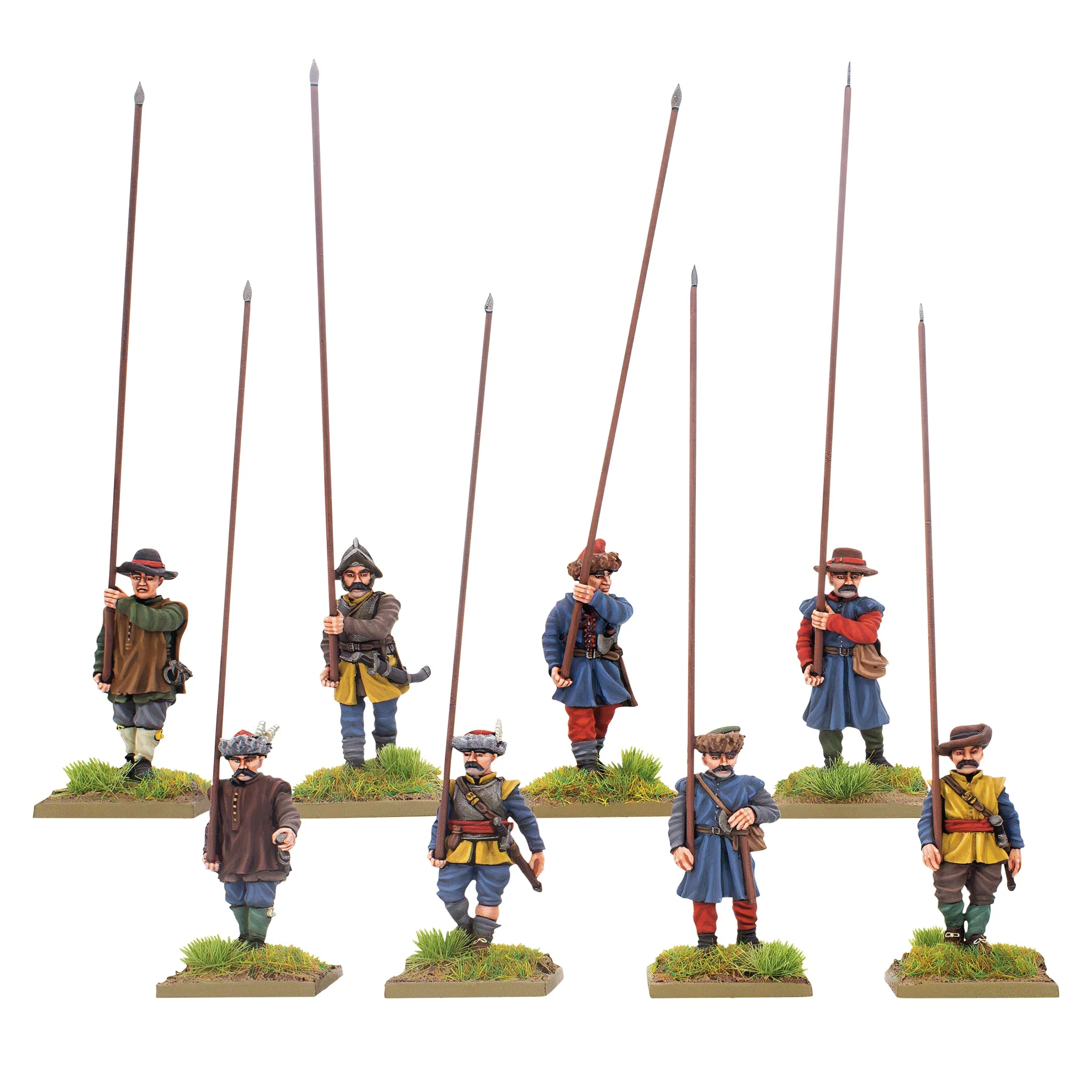
Polish-Lithuanian mercenary pikemen
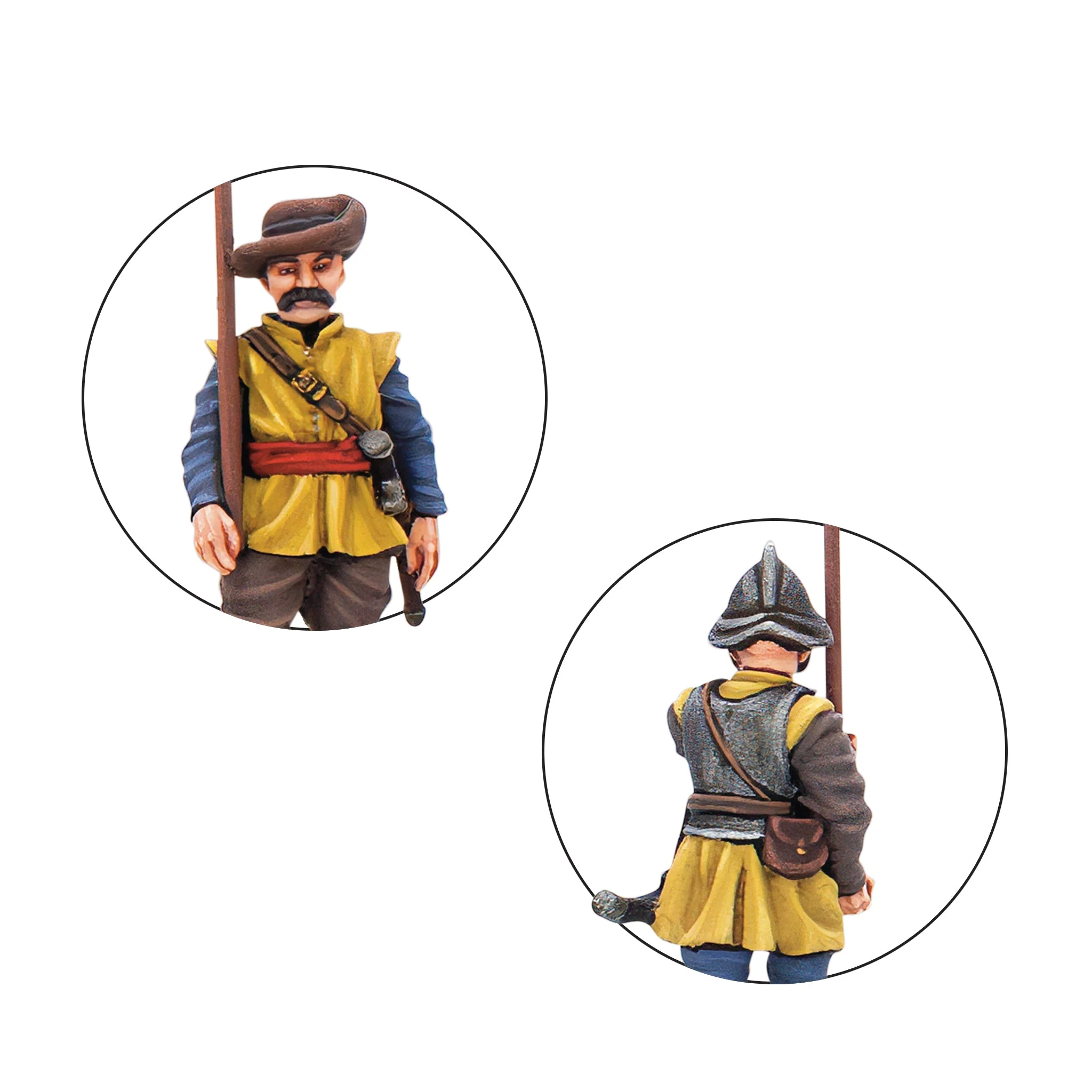
Alongside the hadjuk infantry, the Polish-Lithuanian Commonwealth often employed foreign mercenaries to fill gaps in native manpower. These troops were often recruited from the German states. and also recruited from local levies. Tactically the Poles used their infantry differently than other European nations (besides the Ottomans who fought similarly).
The Poles (and Ottomans) rarely used pikes on the battlefield because they used infantry to support their cavalry, which meant that the infantry were shooting/providing fire as the cavalry charged and maneuvered. The Poles and their Eastern rivals were often fast-moving light cavalry; the massed blocks of pike were less effective on the battlefield because the cavalry fought differently than the mounted arms of Western European armies. However these miniatures add rich element to any Polish army on the tabletop and serve as a visually distinct element to the rest of the army.
Contains:
- 8 metal Polish-Lithuanian mercenary infantry with steel pikes
Miniature sculpted by Wojtek Flis. Studio miniatures painted by Jamie Getliffe.
Models supplied unassembled and unpainted
Original: $29.00
-65%$29.00
$10.15More Images
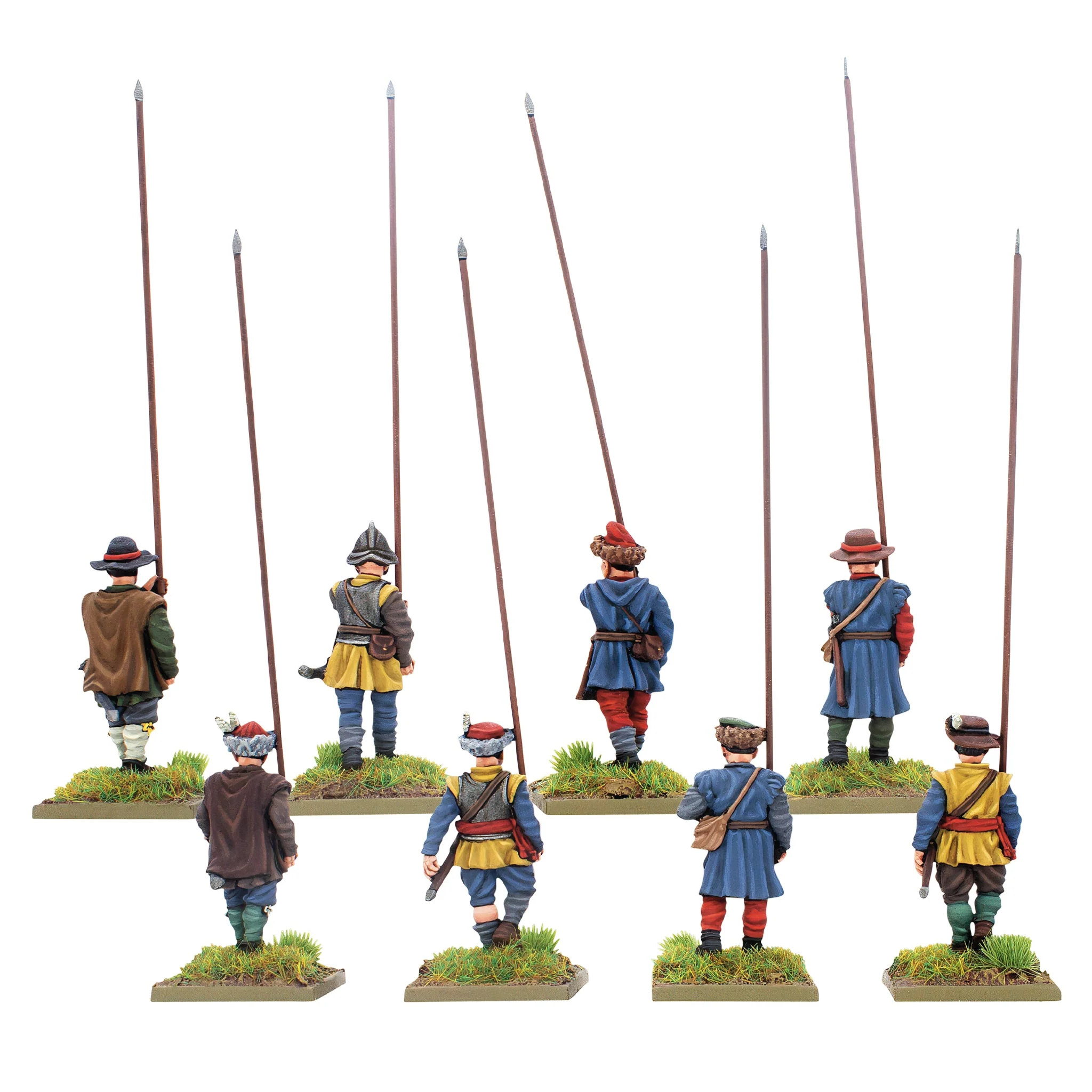
Polish-Lithuanian mercenary pikemen
Alongside the hadjuk infantry, the Polish-Lithuanian Commonwealth often employed foreign mercenaries to fill gaps in native manpower. These troops were often recruited from the German states. and also recruited from local levies. Tactically the Poles used their infantry differently than other European nations (besides the Ottomans who fought similarly).
The Poles (and Ottomans) rarely used pikes on the battlefield because they used infantry to support their cavalry, which meant that the infantry were shooting/providing fire as the cavalry charged and maneuvered. The Poles and their Eastern rivals were often fast-moving light cavalry; the massed blocks of pike were less effective on the battlefield because the cavalry fought differently than the mounted arms of Western European armies. However these miniatures add rich element to any Polish army on the tabletop and serve as a visually distinct element to the rest of the army.
Contains:
- 8 metal Polish-Lithuanian mercenary infantry with steel pikes
Miniature sculpted by Wojtek Flis. Studio miniatures painted by Jamie Getliffe.
Models supplied unassembled and unpainted
Product Information
Product Information
Shipping & Returns
Shipping & Returns
Description
Alongside the hadjuk infantry, the Polish-Lithuanian Commonwealth often employed foreign mercenaries to fill gaps in native manpower. These troops were often recruited from the German states. and also recruited from local levies. Tactically the Poles used their infantry differently than other European nations (besides the Ottomans who fought similarly).
The Poles (and Ottomans) rarely used pikes on the battlefield because they used infantry to support their cavalry, which meant that the infantry were shooting/providing fire as the cavalry charged and maneuvered. The Poles and their Eastern rivals were often fast-moving light cavalry; the massed blocks of pike were less effective on the battlefield because the cavalry fought differently than the mounted arms of Western European armies. However these miniatures add rich element to any Polish army on the tabletop and serve as a visually distinct element to the rest of the army.
Contains:
- 8 metal Polish-Lithuanian mercenary infantry with steel pikes
Miniature sculpted by Wojtek Flis. Studio miniatures painted by Jamie Getliffe.
Models supplied unassembled and unpainted