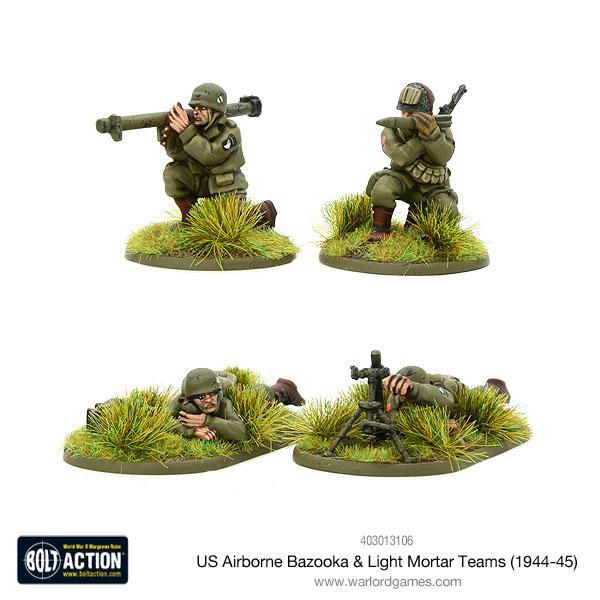
US Airborne Bazooka & light mortar teams (1944-45)
The American Bazooka was first used in North Africa and on Tarawa in November 1942. The final version was longer (1.55m) and improved the range from 200-250 yards to 300 yards. The M6 HEAT rocket could easily penetrate 76mm of armour at 30° or 110mm at 90°.
The standard light mortar was of relatively large calibre at 60mm. It fired a correspondingly larger and more effective shell over a greater range than the smaller mortars used by the Germans and the British. The paratroopers had a lighter version weighing in at 9kg and operated by a 2 man team.
Models supplied unassembled and unpainted
Original: $14.50
-65%$14.50
$5.07More Images
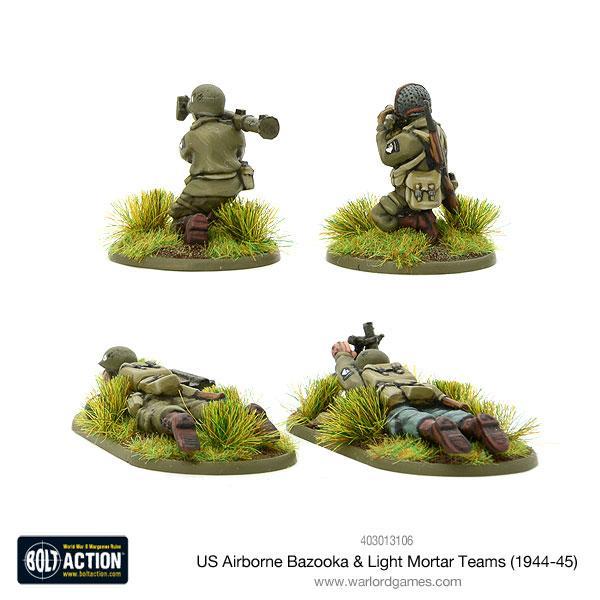
US Airborne Bazooka & light mortar teams (1944-45)
The American Bazooka was first used in North Africa and on Tarawa in November 1942. The final version was longer (1.55m) and improved the range from 200-250 yards to 300 yards. The M6 HEAT rocket could easily penetrate 76mm of armour at 30° or 110mm at 90°.
The standard light mortar was of relatively large calibre at 60mm. It fired a correspondingly larger and more effective shell over a greater range than the smaller mortars used by the Germans and the British. The paratroopers had a lighter version weighing in at 9kg and operated by a 2 man team.
Models supplied unassembled and unpainted
Product Information
Product Information
Shipping & Returns
Shipping & Returns
Description
The American Bazooka was first used in North Africa and on Tarawa in November 1942. The final version was longer (1.55m) and improved the range from 200-250 yards to 300 yards. The M6 HEAT rocket could easily penetrate 76mm of armour at 30° or 110mm at 90°.
The standard light mortar was of relatively large calibre at 60mm. It fired a correspondingly larger and more effective shell over a greater range than the smaller mortars used by the Germans and the British. The paratroopers had a lighter version weighing in at 9kg and operated by a 2 man team.
Models supplied unassembled and unpainted