Wespe self-propelled gun
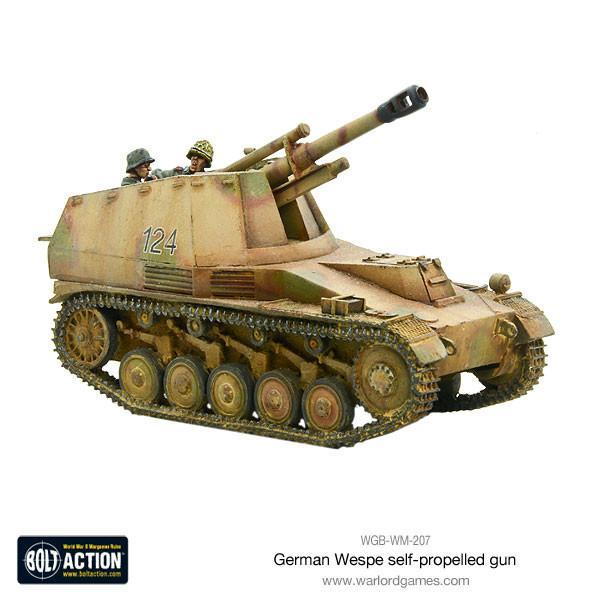
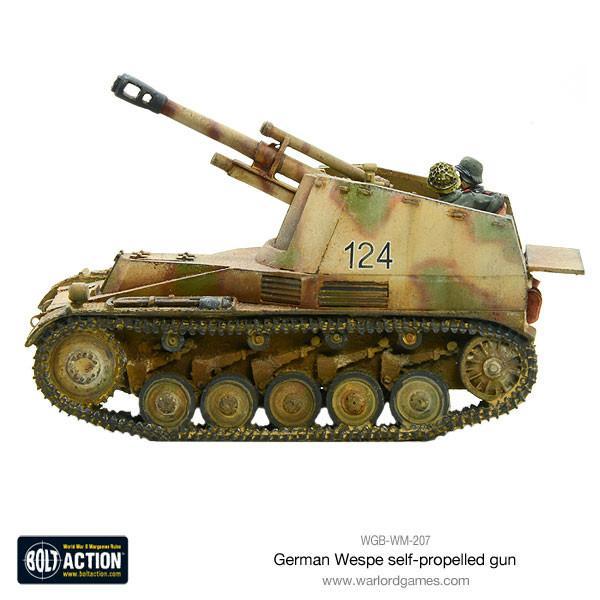
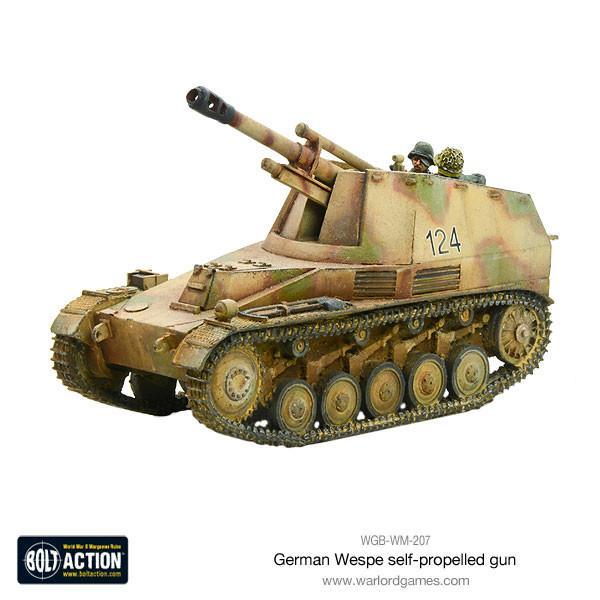
The Sd. Kfz. 124 Wespe (German for "wasp") mounted a 10.5 cm field howitzer on a modified Panzer II chassis. The superstructure was lightly armoured, with 10 mm armour plate (enough to stop small arms fire) and was open at the top and to the rear.
The Wespe saw extensive action on the Eastern Front, where it was popular with crews due to its reliability and good manoeuvrability, making its major combat debut at the titanic battle of Kursk. It also played a large role during the Allied invasion of Normandy and the struggle to stem the tide on both fronts towards the German heartlands. Indeed there were around 300 Wespes still in service when the war came to an end.
Models supplied unassembled and unpainted
Original: $46.50
-65%$46.50
$16.27More Images
Wespe self-propelled gun
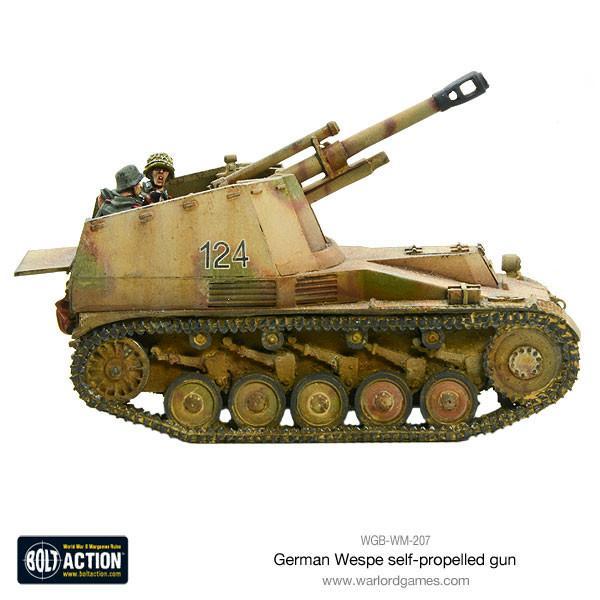
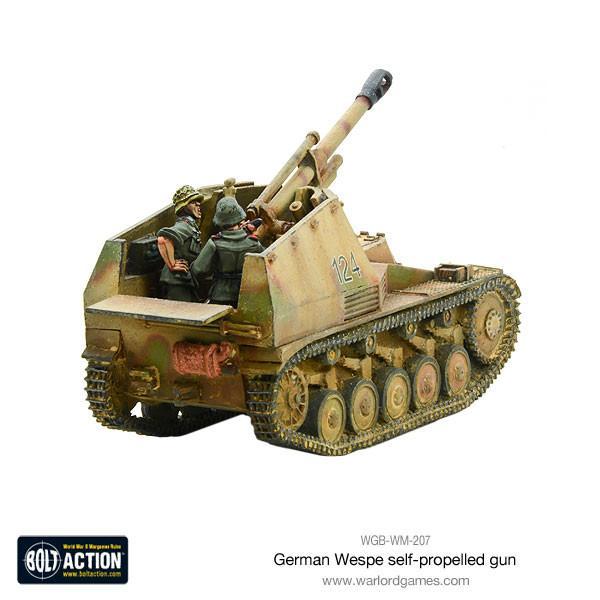
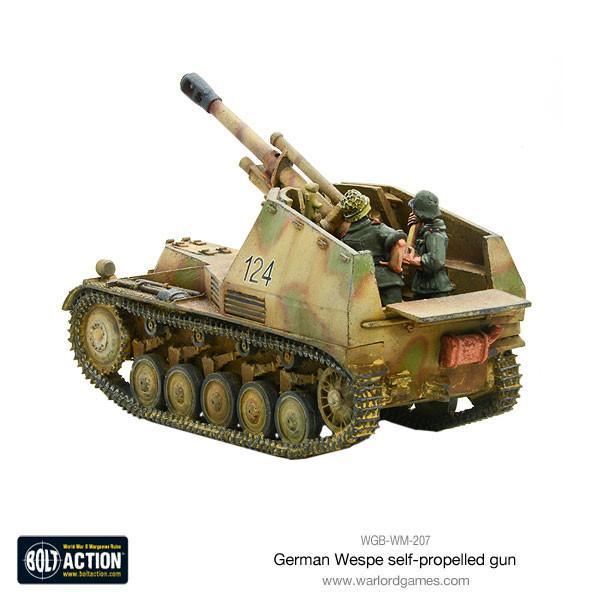
The Sd. Kfz. 124 Wespe (German for "wasp") mounted a 10.5 cm field howitzer on a modified Panzer II chassis. The superstructure was lightly armoured, with 10 mm armour plate (enough to stop small arms fire) and was open at the top and to the rear.
The Wespe saw extensive action on the Eastern Front, where it was popular with crews due to its reliability and good manoeuvrability, making its major combat debut at the titanic battle of Kursk. It also played a large role during the Allied invasion of Normandy and the struggle to stem the tide on both fronts towards the German heartlands. Indeed there were around 300 Wespes still in service when the war came to an end.
Models supplied unassembled and unpainted
Product Information
Product Information
Shipping & Returns
Shipping & Returns
Description
The Sd. Kfz. 124 Wespe (German for "wasp") mounted a 10.5 cm field howitzer on a modified Panzer II chassis. The superstructure was lightly armoured, with 10 mm armour plate (enough to stop small arms fire) and was open at the top and to the rear.
The Wespe saw extensive action on the Eastern Front, where it was popular with crews due to its reliability and good manoeuvrability, making its major combat debut at the titanic battle of Kursk. It also played a large role during the Allied invasion of Normandy and the struggle to stem the tide on both fronts towards the German heartlands. Indeed there were around 300 Wespes still in service when the war came to an end.
Models supplied unassembled and unpainted